
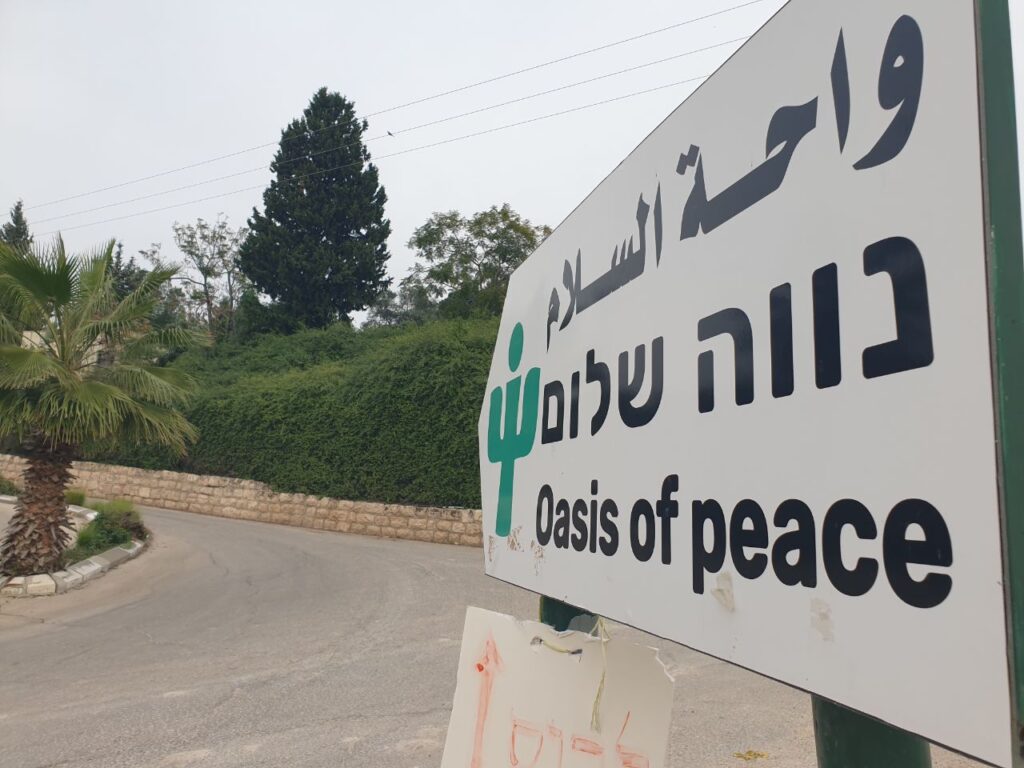
Newe Shalom / Wahat al-Salam - Hebrew and Arabic for “Oasis of Peace” — is a unique intentional community in Israel where Jewish and Arab citizens live together on the basis of complete equality, shared ownership, and a joint cultural and educational life. It is one of the most widely studied and symbolically important coexistence projects in the region.
By Roman Yanushevsky
Jerusalem(INPS Japan) – According to the data published by the Central Bureau of Statistics in Israel (CBS) in late September 2025, out of 10 million of people living in Israel, Jews comprise 7.76 million residents, or some 78.5% of the total population. Arab Israeli citizens number approximately 2.13 million (21.5%). The majority of them are Muslim, while Christians make up 6.9% of the total Arab population.(P-20) |RUSSIAN|JAPANESE|GERMAN|CHINESE|
It means that the Arab population plays a significant role in Israel. You can find Arab Israelis as lawyers, doctors, pharmacists and teachers. Many of them work in the construction field and agriculture, retail and wholesale, transportation, services and hospitality. There are Arab Israeli politicians (Knesset members), Supreme court judges, etc.
There are a number of mixed cities and localities where Jews and Arabs live side by side, but there is only one example of a planned shared Jewish-Arab community.
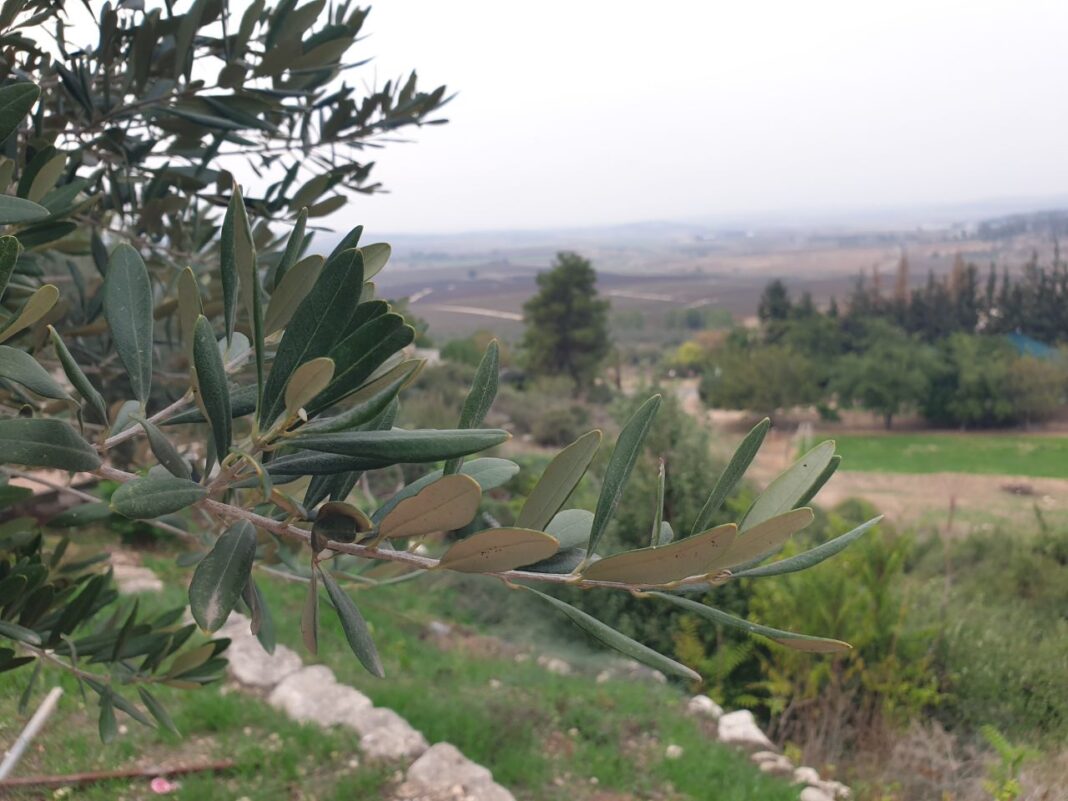
It is called Newe Shalom / Wahat al-Salam. It’s a small village just 20 minutes away from Jerusalem with a very unique story. It was made with the goal of creating a mixed Jewish–Arab community living together by choice, not by administrative accident.

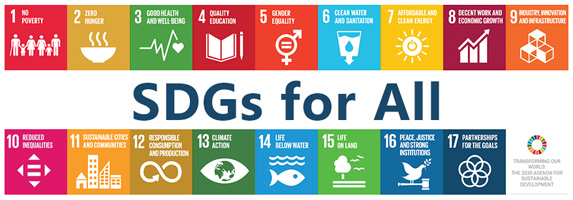
Several UN Sustainable Development Goals (SDGs) are closely connected to the story, mission, and practical work of Neve Shalom/Wahat al-Salam:
SDG 4 — Quality Education
SDG 10 — Reduced Inequalities
SDG 11 — Sustainable Cities and Communities
SDG 16 — Peace, Justice and Strong Institutions
SDG 17 — Partnerships for the Goals
One monk’s vision (early 1970s)
The idea to create such a community came from Father Bruno Hussar, a Dominican monk of Jewish origin who was deeply troubled by the Israeli-Arab conflict. After the Six-Day War, he imagined a place where Jews, Muslims, and Christians could live together not in theory, but in daily life.
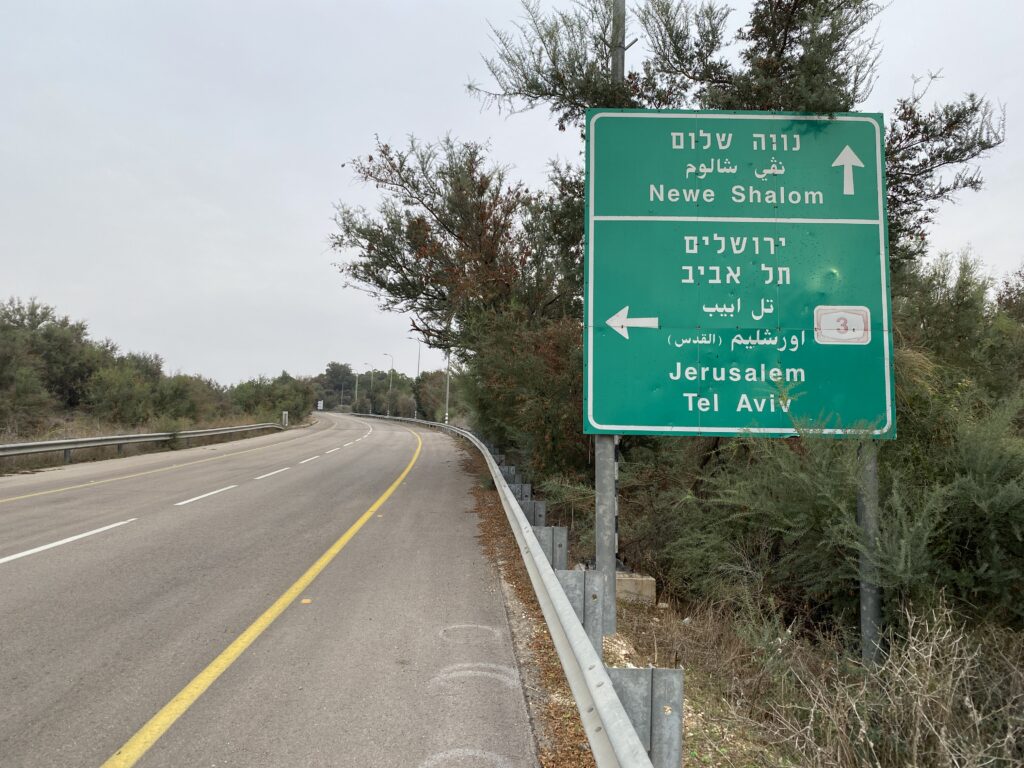
In 1972, the community was founded on a barren hill next to the Latrun area, on land leased from the Abu Ghosh village. There were no houses, no infrastructure, and only a few pioneers.
The name was chosen deliberately in both languages:
- Newe Shalom (Hebrew),
- Wahat al-Salam (Arabic).
Both mean “Oasis of Peace.”
Slow start (1970s–1980s)
The first families — Jewish and Arab — began arriving in the late 1970s and early 1980s. Every aspect of life had to be negotiated from scratch:
- How to run a bilingual community,
- How to celebrate holidays,
- How to educate children in two languages,
- How to make decisions equally
They adopted a consensus-based system, where Jews and Arabs each hold equal power.
In the early years, the project attracted both admiration and skepticism. Some Israelis and Palestinians saw it as a naïve experiment. Others saw it as a model for a shared society.
A Bilingual School That Made History (1984 onward)
Perhaps the community’s biggest accomplishment is the bilingual, binational primary school, founded in 1984 — the first of its kind in Israel.
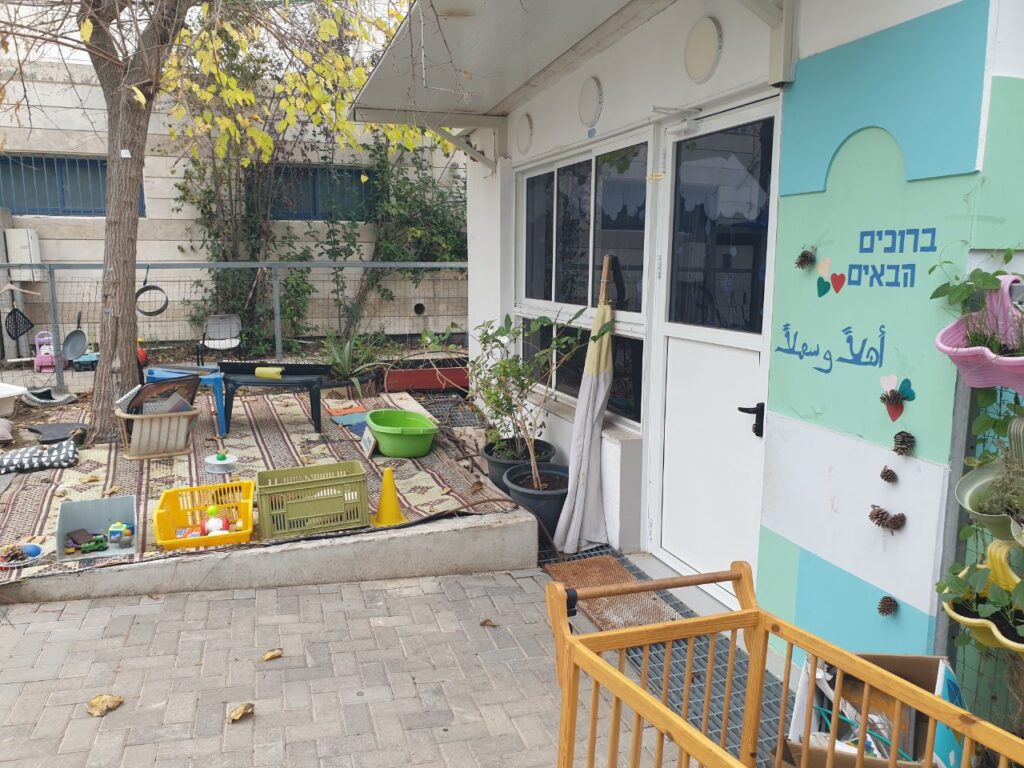
Key features:
- Half Jewish, half Arab students,
- Two homeroom teachers in each class (one Hebrew-speaking, one Arabic-speaking),
- The curriculum includes both Israeli and Palestinian narratives.
The school later expanded into the first integrated bilingual junior high school in Israel.
Its influence has been enormous: today more than half a dozen bilingual Arab–Jewish schools in Israel were inspired by this model.
The “School for Peace” (1980s-today)
Another major institution in the village is the School for Peace, founded in 1979.
It offers: conflict-resolution seminars, encounter programs for youth and adults, workshops for professionals (teachers, psychologists, activists). Tens of thousands of people — Israelis, Palestinians, international students — have gone through these programs. Many report that it changed how they view the conflict.
Growth and Global Recognition (1990s–2000s)
By the 1990s and early 2000s, the village became world-famous.
It received:
- The UNESCO Prize for Peace Education (2001),
- Numerous international delegations and journalists,
- Support from peace organizations abroad
The community grew slowly but steadily. Families join through a long selection process, since the village must maintain equal numbers of Jews and Arabs. The population today is roughly 70–80 families (it fluctuates).
Controversies and Internal Tensions
Despite its hopeful image, the village has not been free from internal struggles.
Even inside a coexistence community, Jewish and Arab residents disagree on:
- How to talk about the Nakba,
- The meaning of Zionism,
- National symbols,
- Military service (most Jewish residents serve; Arab residents do not),
- Land and bureaucratic battles
For decades, the community struggled to get official master plans, secure building permits, expand housing, and political pressures. During times of heightened conflict (e.g., the Second Intifada, wars in Gaza), tensions inside the village rose sharply. Some residents left, feeling overwhelmed or disillusioned. However, the community has consistently survived, rebuilt trust, and continued to grow.
Newe Shalom / Wahat al-Salam Today
As of 2025, the community includes Jews, Muslims, and Christians. It continues to run the bilingual school, the School for Peace, a spiritual center called the Pluritralistic Spiritual Centre. It attracts visitors, researchers, journalists, and delegations.
While small in numbers, its symbolic importance is large: it demonstrates that Jewish–Arab cooperation is possible as a lived reality, not only as a political dream.
Newe Shalom / Wahat al-Salam is not meant to be a utopia. Life there is often difficult, emotional, and political. But it remains one of the few places where Jews and Arabs share equal governance, equal education, and equal community life.
A model studied in conflict-resolution programs worldwide. It is a living example of what a shared Israeli-Palestinian society could look like.
Why is Newe Shalom / Wahat al-Salam unique?
There are a number of cities and towns with mixed populations in Israel. Such as Jerusalem, Tel Aviv (Jaffa), Haifa, Acre, Lod and others. But if compared to Neve Shalom / Wahat al-Salam, critical differences remain.
- In most mixed cities, Arabs and Jews live largely in segregated neighborhoods, not in a unified “village-community”.
- Shared institutions — bilingual schools, joint self-governance, community-wide decisions — are rare to non-existent.
- Therefore, even if there is “coexistence by chance” (living in the same city), there’s little that matches the intentional, shared-society character of NS/WaS.
This is why the example of Newe Shalom / Wahat al-Salam is very inspiring and it proves that Jewish/Arab coexistence by choice is possible.

This article is brought to you by INPS Japan in partnership with Soka Gakkai International, in consultative status with UN ECOSOC.
INPS Japan
