

On the eve of an international gathering of religious leaders, a press tour of Astana's sacred buildings, ancient treasures and modern landmarks revealed the historical and cultural foundations of Kazakhstan's diplomacy of dialogue.
By Katsuhiro Asagiri
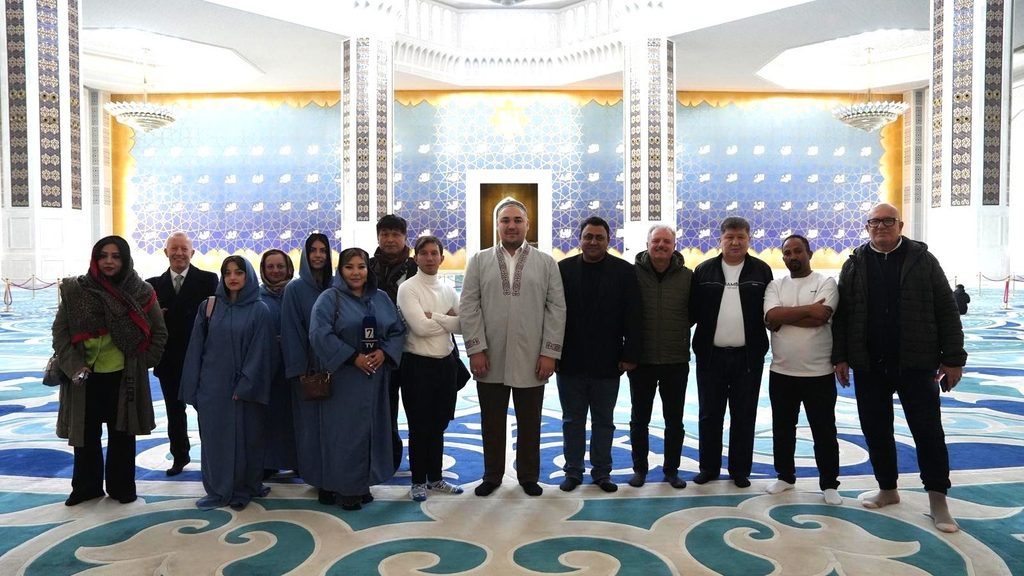
ASTANA, Kazakhstan (INPS Japan) — “Where is the sun?” a guide asked a group of international journalists standing beneath the immense dome of Astana’s Nur-Sultan Mosque.|JAPANESE|
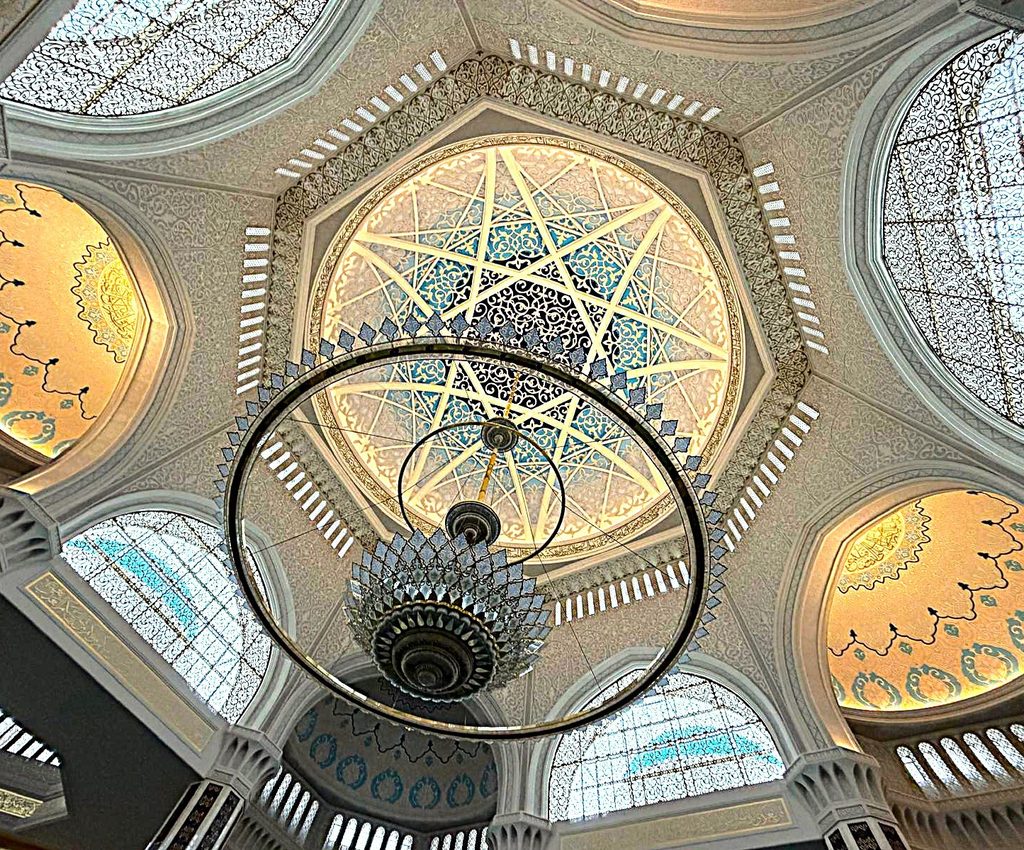
The answer was overhead: an enormous chandelier suspended from a vast blue ceiling.
The darker blue represented the universe, the lighter blue the daytime sky. Together, they evoked the shanyrak, the circular crown of a traditional Kazakh yurt, through which generations of nomads had looked toward the heavens.
It was an unexpected introduction to Kazakhstan’s religious and cultural landscape, where ancient traditions, different faiths and the ambitions of a modern nation find expression in the architecture of its capital.
The visit on Oct. 6 was part of a press tour organized for international journalists ahead of the 24th meeting of the Secretariat of the Congress of Leaders of World and Traditional Religions, a Kazakhstan-led initiative established in 2003.
Although the itinerary was shortened because of time constraints, the journalists visited five sites: Nur-Sultan Mosque, the Russian Orthodox Holy Dormition Cathedral, the Roman Catholic Cathedral of Our Lady of Perpetual Help, the National Museum of Kazakhstan and the Baiterek Monument.
Together, they offered a perspective on the country’s history and identity that no conference declaration alone could convey.
Faith in Different Forms
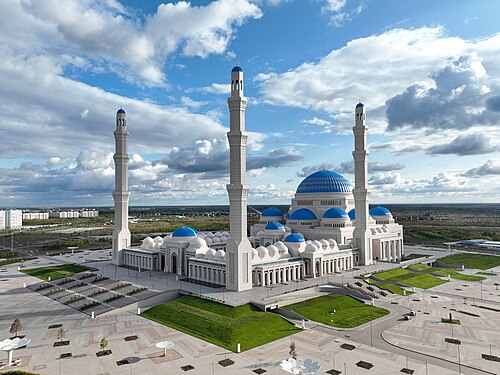
Opened in 2022 and officially renamed in July 2026, Nur-Sultan Mosque is among Central Asia’s most imposing Islamic buildings.
The guide, who introduced himself as Yermar, an adviser to the chief imam, repeatedly drew attention to decorative features rooted in Kazakh culture.
Ram’s-horn motifs appeared throughout the building. The enormous central chandelier symbolized the sun. The mosque’s architectural design incorporated imagery drawn from the country’s nomadic heritage.
Yermar also described the mosque’s educational activities, including free classes in the Quran, Islamic teachings and religious practice.
His explanations presented the building not merely as an architectural achievement, but as a place where Islamic faith and Kazakh cultural identity reinforce one another.
At the next stop, Holy Dormition Cathedral, the visual language changed dramatically.
Consecrated by Patriarch Kirill of Moscow and All Russia in January 2010, the Russian Orthodox cathedral rises 68 meters. Inside, elaborate religious paintings and icons reflect a different spiritual and historical tradition.
A guide pointed to icons depicting Saint Nicholas and scenes from his life. Other sections of the cathedral honor the Virgin Mary, the Archangel Michael, and Saints Cyril and Methodius.
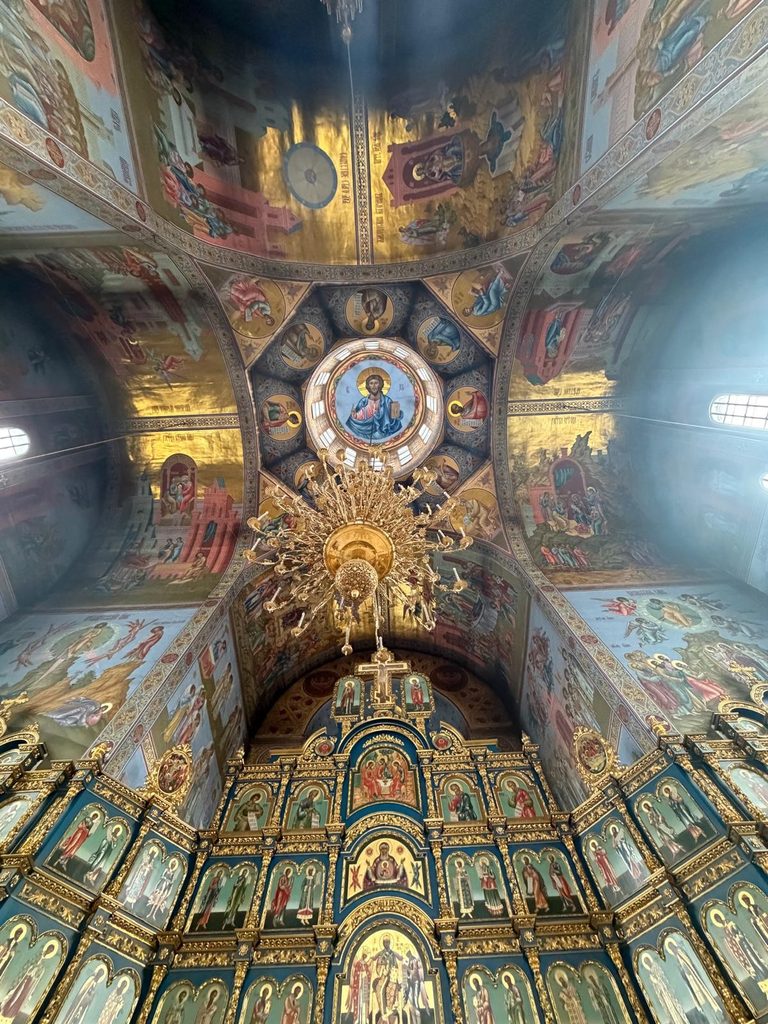
According to church records, the cathedral also houses a relic of the Apostle Andrew, presented to Kazakhstan’s Orthodox community by Pope Benedict XVI in 2010.
It is a reminder that religious connections can cross even the historical divisions between Christian churches.
The journalists then visited the Cathedral of Our Lady of Perpetual Help, serving Astana’s Roman Catholic community.
From an Islamic mosque to an Orthodox cathedral and then a Catholic church, the tour moved through distinct expressions of faith rooted in the same capital.
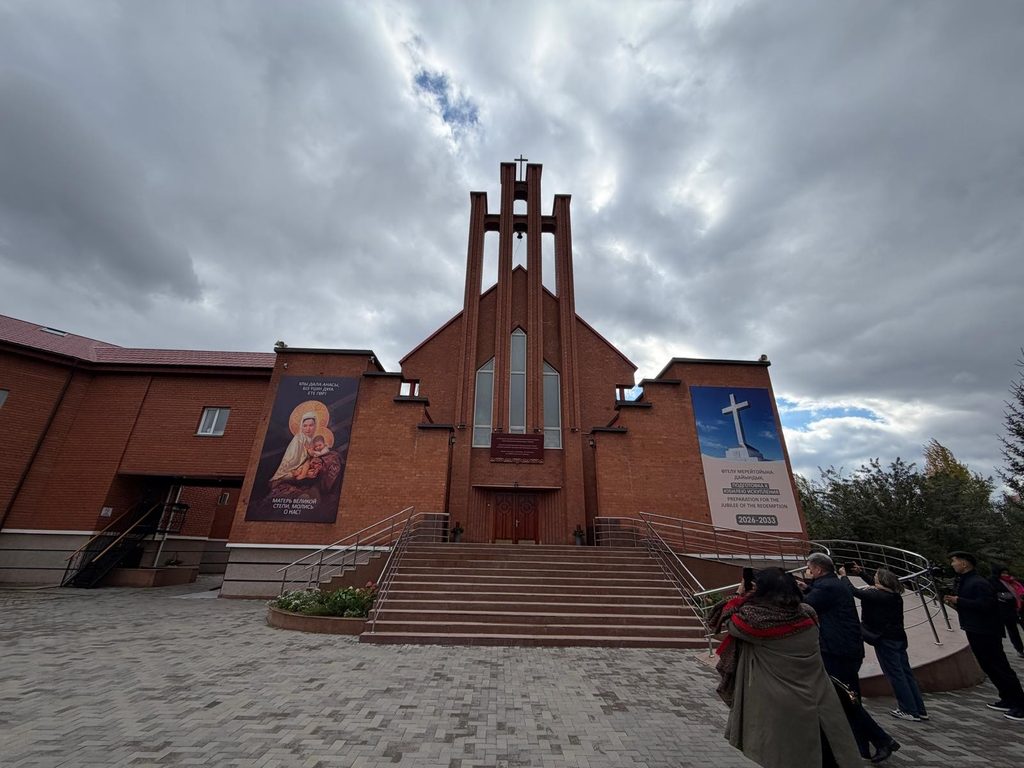
Their presence illustrates Kazakhstan’s religious diversity. Yet the existence of different places of worship alone cannot establish how successfully their communities coexist in everyday life.
Understanding that requires looking beyond the buildings themselves.
The Golden Man and the Nomadic Past
At the National Museum of Kazakhstan, the journey moved backward more than two millennia.
A centerpiece was the celebrated “Golden Man,” a reconstruction of the ceremonial clothing of a young member of the ancient Saka elite.
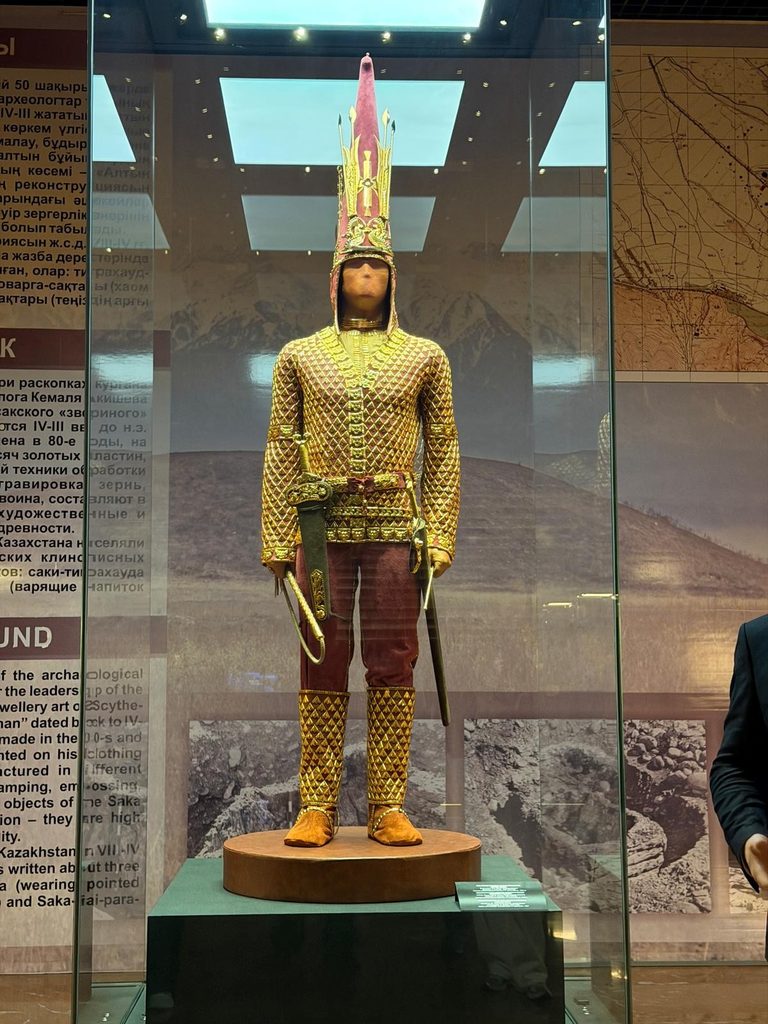
Discovered in 1969–1970 at the Issyk burial mound near Almaty, the remains were accompanied by thousands of gold ornaments dating from approximately the fifth to fourth centuries B.C.
More than 4,000 gold decorations were recovered. The reconstructed costume has become one of the most recognizable symbols of independent Kazakhstan.
Nearby exhibits explored ancient Turkic inscriptions, burial rituals, decorated horses, stone monuments and the extraordinary craftsmanship of peoples who inhabited the Eurasian steppe.
Yet some of the guide’s most revealing explanations concerned traditions that remain part of contemporary life.
Standing near displays of yurts, clothing and household objects, he spoke about family meals, horse meat, wedding ceremonies and the custom of waiting for the eldest family member to begin eating.
Meals, he explained, were not simply occasions for sharing food. They brought relatives together, maintained relationships and allowed families to exchange news.
For the guide, these traditions were not merely remnants of a vanished civilization.
They remained recognizable elements of Kazakh life, transformed over time but still deeply rooted in everyday experience.
A City Looking Toward the Future
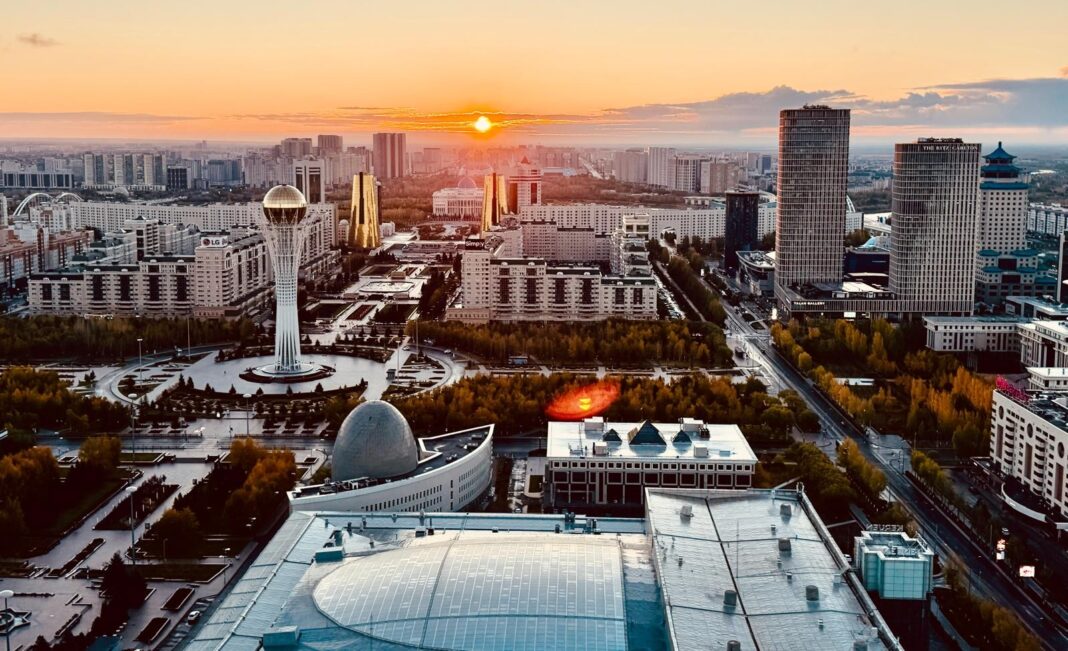
The final stop was Baiterek, the 105-meter monument overlooking Astana’s modern administrative center.
Its design draws on the ancient legend of the Tree of Life.
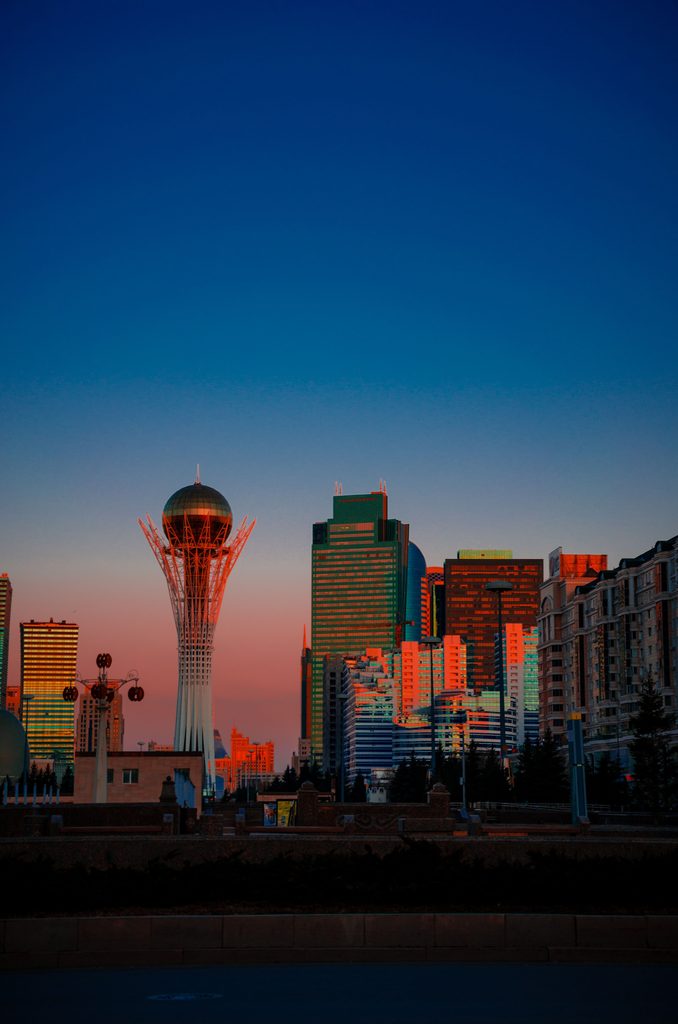
A sacred bird, Samruk, lays a golden egg representing the sun, while a dragon beneath the tree seeks to swallow it.
The story symbolizes the struggle between light and darkness, renewal and destruction.
From the observation sphere, the guide traced the transformation of Astana from the Soviet-era city of Akmola into the capital of independent Kazakhstan.
Across the Ishim River stretched a modern administrative district that had emerged within a generation.
Much of the city’s planning vision drew on the ideas of Japanese architect Kisho Kurokawa, whose proposal won the 1998 competition for the capital’s master plan.
Kurokawa’s concepts of metabolism and symbiosis envisioned a city capable of growth and renewal, connecting history with the future.
The guide described Astana’s development as a movement “from the past to the future.”
Among the landmarks in the modern cityscape was the pyramid-shaped Palace of Peace and Reconciliation, built as a venue for the international interfaith dialogue launched in 2003.
Baiterek itself preserves another connection to that history.
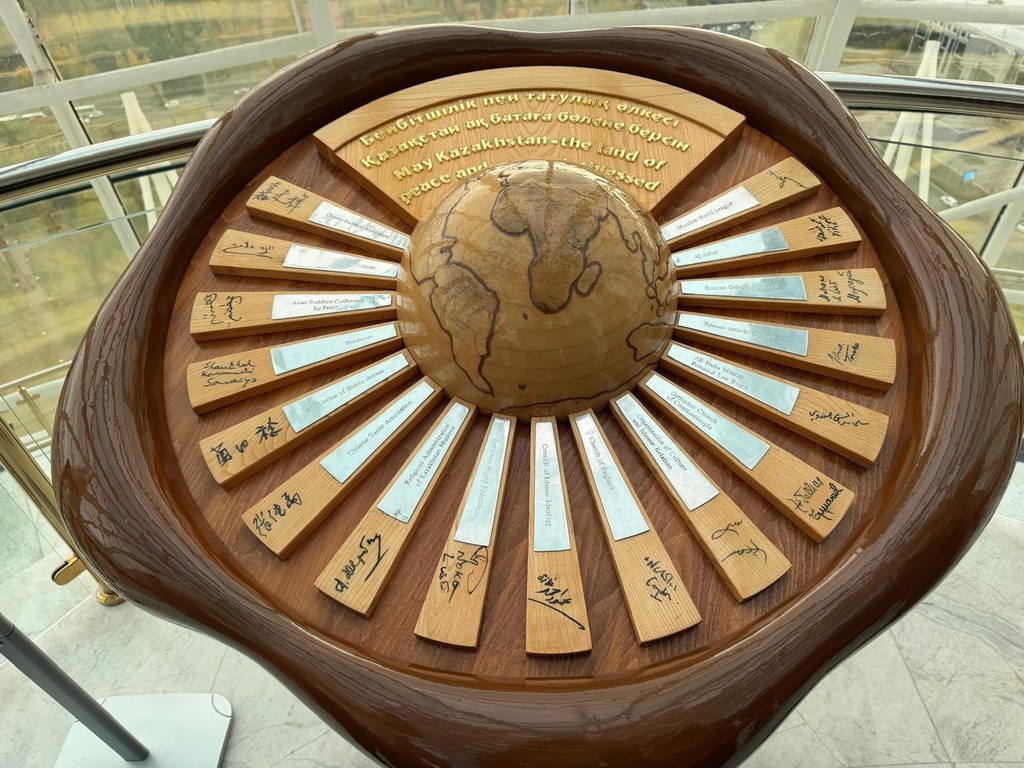
According to the monument’s operators, an installation known as Bata, or Blessing, bears the signatures of representatives of 17 religious denominations who attended the inaugural Congress.
Beyond the Symbols
The following day, Oct. 7, religious leaders gathered at the Palace of Peace and Reconciliation to discuss artificial intelligence, climate change and the dignity of children with incurable diseases.
Their discussions reflected a broader ambition: to transform interfaith dialogue into practical cooperation on challenges confronting humanity as a whole.
Kazakhstan’s Constitution defines the country as a secular state, establishes the separation of religion and state, prohibits discrimination on religious grounds and guarantees freedom of conscience as a right that cannot be restricted.
What the press tour revealed was something more concrete: how Kazakhstan draws upon its historical and cultural heritage to define its place in the contemporary international community.
The shanyrak beneath the mosque’s dome, Christian religious paintings, ancient Saka gold and the mythical Tree of Life belong to different worlds of belief and memory.
In Astana, they have become parts of a national narrative that places dialogue at the center of the country’s aspirations.
The monuments give that ambition a visible form.
But its deeper significance will depend on how the values they represent are translated into everyday life, far beyond the capital’s ceremonial spaces.
This article is brought to you by INPS Japan in collaboration with Soka Gakkai International in consultative status with UN ECOSOC.

INPS Japan
Related Articles: