
Bamboo and nopal cactus fiber have become sustainable alternatives for researchers and entrepreneurs in fields such as industrial design and fashion.
By: Guillermo Ayala Alanis.
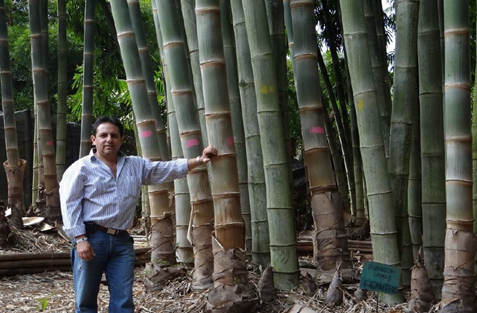
Mexico City (INPS Japan) – Known as “the plant of a thousand uses” for its versatility, which spans fields ranging from food to construction, bamboo is a material that captures the interest of researchers at universities around the world. “If I were stranded on a desert island with nothing but bamboo, I would be happy… It is a very versatile plant where the only limits are those of the imagination,” says José Luis Gutiérrez Sentíes, Doctor of Science and Arts for Design, who has been working with this species for more than 15 years at the Universidad Autónoma Metropolitana, Xochimilco Campus, UAM-X. (P-32)|SPANISH|JAPANESE|
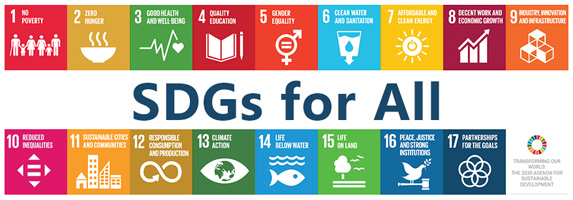
From an industrial design perspective, the academic seeks to promote the use of bamboo in line with the Sustainable Development Goals (SDGs) such as Quality Education, SDG 4, and Responsible Consumption and Production, SDG 12. Through interdisciplinary research and workshops held at UAM-X, he encourages the student community to develop the ability to create and transform this ancient plant into everyday objects.
“They should learn about bamboo, know that it exists and that it has certain characteristics and properties that can be exploited… that it has a low environmental impact… The issue of the environment is already a cross-cutting theme that we must all follow,” he emphasizes.
The courses are not only attended by industrial design students; this activity has also allowed future designers to connect with students from other disciplines. In these activities, items as varied as bicycles, tables, and kitchen utensils are manufactured. The experience not only strengthens technical skills but also broadens the vision of materials and their innovative potential.
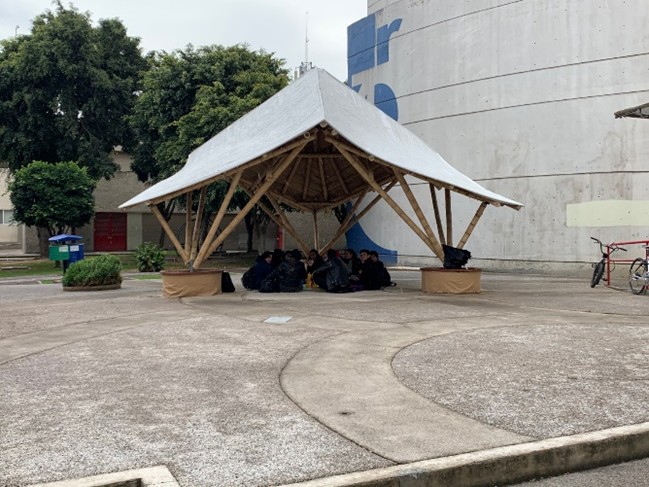
Although mainly popularized in Eastern cultures, bamboo belongs to the grass family, just like oats, corn, wheat, and grass. It can measure from a few centimeters to heights as tall as a 12-story building (approximately 40 meters), which allows it to be used to build scaffolding and housing. It also represents an alternative to wood, which helps reduce indiscriminate logging, contributing to SDG 15, Life on Land.
“It helps to generate products without the need to cut down so many trees, thus avoiding problems such as soil erosion and the destruction of forests. Trees are part of an ecosystem, so if you remove the trees, you will destroy the entire ecosystem where all kinds of plants and animals live,” explains Dr. Gutiérrez.
There are 1,200 species of bamboo on the planet. In the Americas, it is distributed from the United States to Chile. In Mexico, there are 36 woody species and four herbaceous species of bamboo, found in states with tropical climates such as Colima, Oaxaca, Chiapas, Puebla, and Veracruz. Some of these states are home to companies that offer products for the construction industry.
In Mexico, bamboo has traditionally been used in rural areas, where the resource is naturally available. It is commonly used in the construction of homes, as well as in the production of handicrafts, basketry, furniture, and utensils. The Mexican government points out that the cost of building a decent, low-cost home made of “green steel,” as bamboo is also known, can be up to 40 percent lower than that of a home built with traditional materials. At the same time, its use has spread to hotel complexes that seek to integrate this activity with nature.
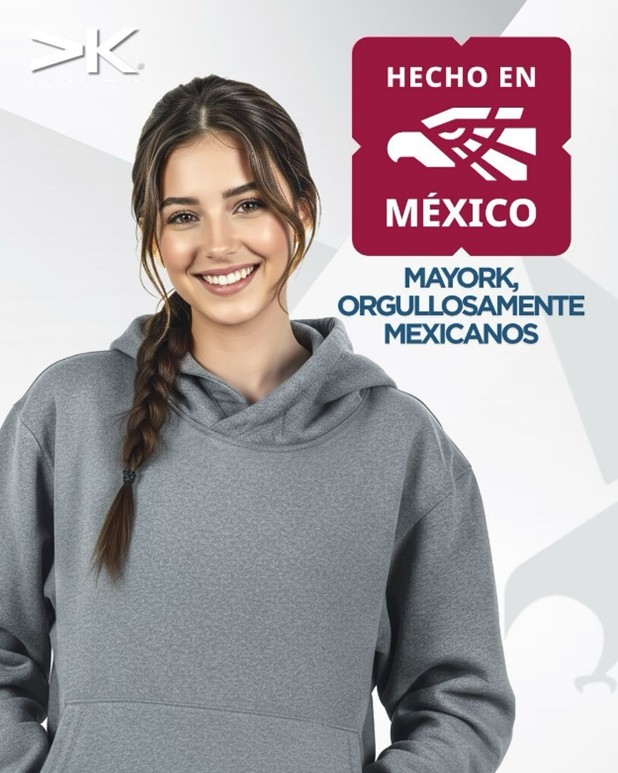
Interest in alternative materials is not limited to bamboo. Other plants, such as nopal cactus, are also being studied by both the scientific community and Mexican industry. In Guadalajara, for example, a company decided to manufacture T-shirts and sweatshirts made from nopal fiber combined with recycled PET and cotton, in line with SDG 9, Industry, Innovation, and Infrastructure.

Source: MAYORK.
Álvaro Ruiz Zúñiga, Sales and Marketing Manager at Mayok, points out that the project began four years ago as part of an interest in contributing to reducing environmental impact. The idea took shape two years ago, and today they are successfully selling their T-shirts and sweatshirts. “We live on Earth and we should be friendly to it. So it’s an extra cost for the manufacturer, it’s an extra cost for the buyer; however, it’s a benefit for everyone, and I think that little by little, many more products with these characteristics will be made,” he says.
In Mexico, clothing made from recycled materials can cost between 25 and 30 percent more than conventional clothing. However, the company believes that the investment is justified because it helps save the planet. Mayork currently has branches in Guadalajara, Sinaloa, Puerto Vallarta, and Mérida, as well as a distribution center that allows them to serve a large part of the country.
Source: MAYORK.
Ruiz Zuñiga says that the garments underwent quality testing to observe their performance with different designs and colors. In addition, they worked on a texture that would make them more comfortable, resulting in a large order for sweatshirts linked to international sporting events such as the one Mexico will host in June 2026. “We have confidence in our products. For example, we had a massive purchase of sweatshirts, which I understand is for the World Cup. There will be customers who will like the designs,” he said.
The United Nations (UN) warns that the textile industry is responsible for 20% of global wastewater and 10% of total carbon emissions. In this context, the use of natural fibers and recycled PET contributes to reducing water pollution.
In Mexico, the textile industry generates around 144 billion tons of waste annually. The use of natural fibers such as nopal cactus and fibers made from recycled PET contributes to the spread of SDG 12, Responsible Production and Consumption.
Both in university workshops and in companies that are committed to recycled materials, the transformation towards a more sustainable life begins with the awareness of individuals. Because if they prove anything, it is that the limit is not in the production materials, but in the imagination.
INPS Japan