


NVIDIA’s Jensen Huang visits Astana as the country seeks to turn its resources and industrial experience into jobs and businesses for the AI era.
By Katsuhiro Asagiri
Tokyo/Astana (INPS Japan) – Kazakhstan has long supplied the world with resources extracted from beneath its soil. Visiting the capital, Astana, on October 23, NVIDIA chief executive Jensen Huang described the possibility of turning some of that energy into a new export.
“Instead of just exporting energy in the future, you could transform the energy into intelligence and export intelligence,” he said.|JAPANESE|
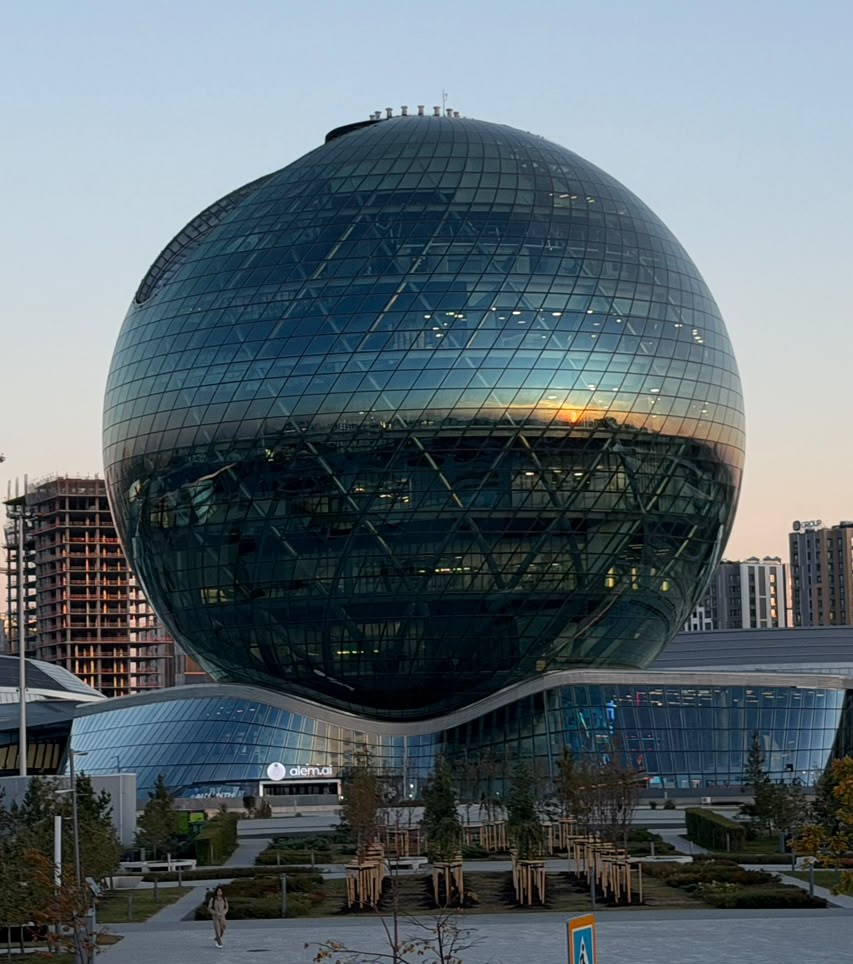
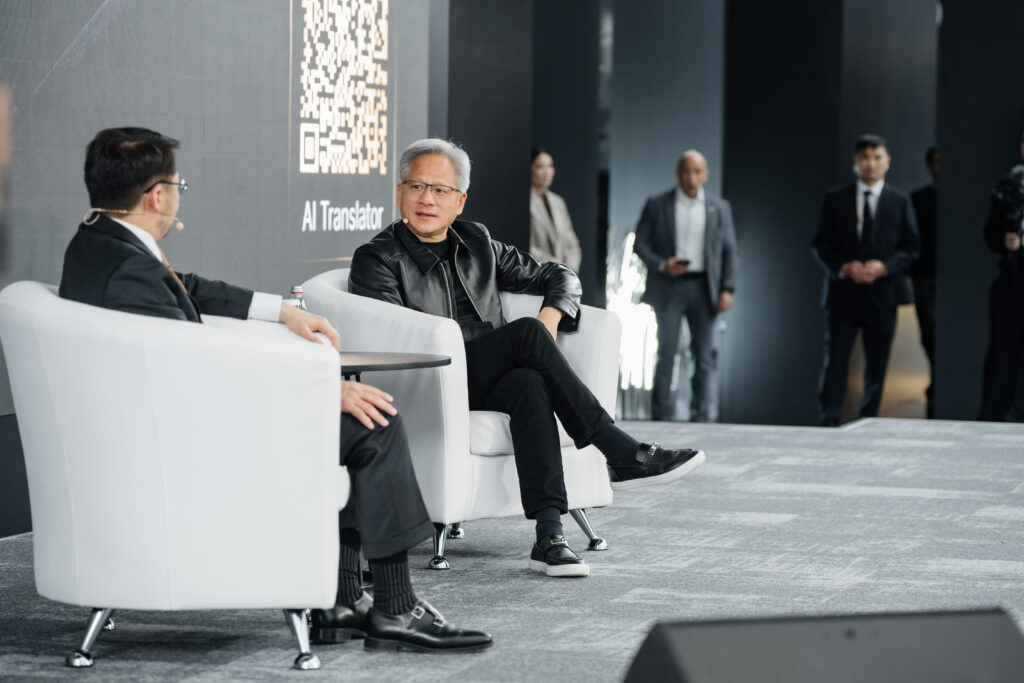
The setting was alem.ai, an international artificial intelligence center housed in a spherical former Expo building, where Huang joined Zhaslan Madiyev, Kazakhstan’s deputy prime minister and minister of artificial intelligence and digital development, for an onstage conversation. Children encounter new technologies at the center, students learn, and entrepreneurs and researchers develop their work. There, Huang argued that Kazakhstan could combine electricity, industrial knowledge and technical talent to claim a place in the AI economy.
An announcement during the conversation gave those ambitions a concrete link to international capital. Madiyev revealed that NVIDIA had invested in Higgsfield, an AI video generation company.
Huang praised the vision and technical abilities of the founders, whose company has operations in Kazakhstan and the United States, and their willingness to challenge well-financed global competitors.
“You invest in people, not companies,” he said.
According to the organizers, Higgsfield employs more than 600 people in Kazakhstan. Huang highlighted the team’s ability to combine the cultures and expertise of two countries and compete internationally. The investment amount and ownership stake were not disclosed during the discussion, but the announcement illustrated the kind of company Kazakhstan hopes to nurture: one that draws on domestic talent to develop products for the world.
Huang’s visit concluded AI Month, a program of events that began on September 23. At AI & Digital Bridge 2026 earlier in October, officials and business leaders had outlined plans connecting computing infrastructure, investment, telecommunications and education. On October 23, the head of a company whose technology supports much of the global AI industry endorsed that direction.
NVIDIA also has a commercial interest in the market’s expansion. Kazakhstan’s planned computing facilities are expected to use its chips, while local telecommunications companies are developing infrastructure powered by its technology.
For Kazakhstan, the objective is to diversify an economy dependent on natural resources. It wants to turn the electricity and knowledge associated with those industries into new technologies, jobs and export revenue.
Madiyev outlined plans to nearly double installed electricity generation capacity by 2035, to more than 40 gigawatts. The government frames its AI strategy in five layers: energy, chips, cloud infrastructure, AI models and applications.
Huang’s explanation also began with electricity. AI systems require ongoing computation to generate outputs in response to users’ requests. He calls the facilities that perform that work “AI factories” — places that use electricity and data to create value supporting economic activity.
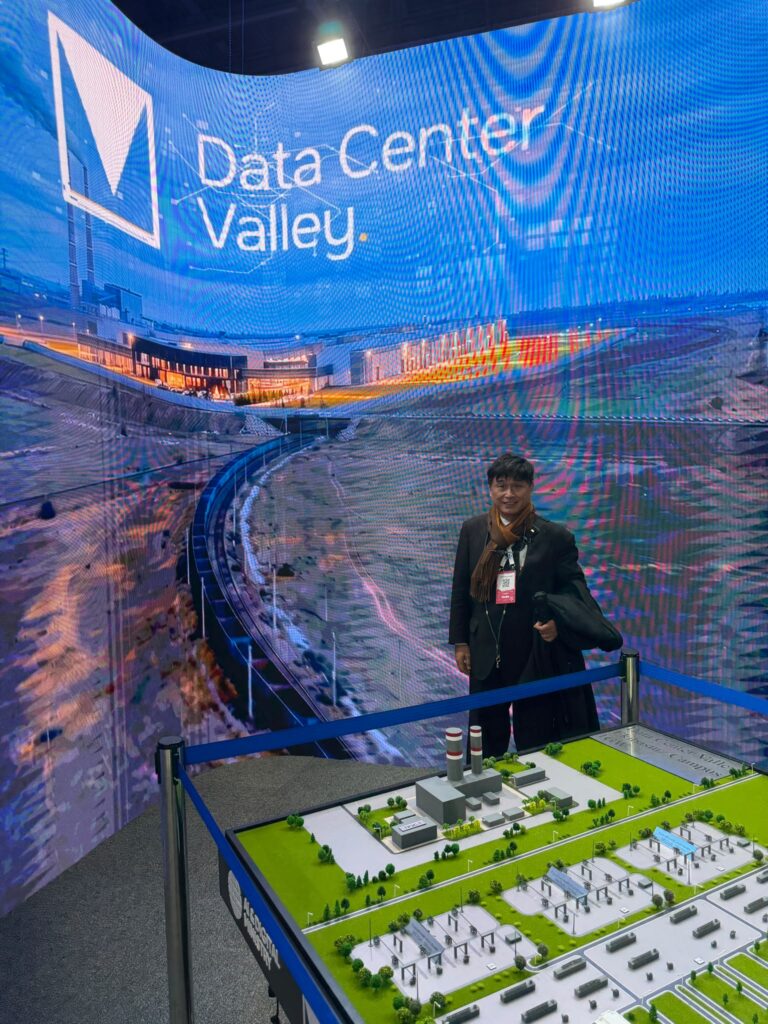
The proposed Data Center Valley in Ekibastuz is intended to help realize that vision. The latest official announcement describes an initial capacity of 250 megawatts, expandable to one gigawatt. With better telecommunications links, Huang said, Kazakhstan could become a computing hub connected to Europe’s AI economy.
Infrastructure alone will not create a new industry. Investment spreads through an economy as researchers and businesses gain access to computing power and develop products and services that solve customers’ problems.
During INPS Japan’s reporting in Astana earlier in October, officials described access to computing resources, education and startup support as parts of an integrated effort. The latest conversation extended those connections to the country’s established industrial expertise.
Huang discussed “physical AI,” technology that enables systems to understand and operate in the physical world. Its applications extend beyond robots to mapping mines and wells, analyzing geology, processing minerals and developing new materials.
Mining, agriculture, energy and logistics are fields in which Kazakhstan has accumulated knowledge over many years. Cooperation between people who understand those industries and AI developers could provide a way to translate that experience into new products.
The organizers’ announcement outlined an ambition to open domestic industrial sites to international cooperation in developing, training and testing technology. The goals include improving workplace safety as well as productivity.
Huang said physical AI remained at an early stage, giving Kazakhstan an opportunity to help shape its future. Referring to robotics companies he had seen during his visit, he expressed enthusiasm for cooperation with local developers.
The discussion also focused on AI that reflects a country’s language and culture.
Madiyev described efforts to adapt openly available foundation models to Kazakh and its cultural context, then asked whether it would make sense to build an independent foundation model from scratch.
Huang emphasized that a country’s data contains its history, culture and values. The ability to manage that data and provide AI services domestically, he argued, would become infrastructure comparable to electricity and telecommunications networks.
He supported adapting openly available technologies to local languages and cultures and operating them domestically. Kazakhstan’s expertise in science, mathematics and software development, he said, provided a foundation for building that capability.
Expanding AI in schools and public services requires systems that work in the languages people use and respond to the circumstances of their lives. Supporting local languages is therefore essential to making AI’s benefits widely accessible.
Preparing people to use those tools was another recurring theme of the conversation.
Huang argued that AI could help farmers expand their operations, scientists investigate more questions and engineers explore better designs. The word he used repeatedly was “ambition.”
Madiyev asked how children could develop their ability to think without becoming overly dependent on AI. Huang said the technology could help children who wanted to learn more, and stressed the role of parents and educators in encouraging curiosity and aspiration.
A similar concern had emerged during INPS Japan’s reporting earlier in October. During an exchange using a translation app, Dastan, an 18-year-old student from Atyrau, expressed concern about relying on AI instead of developing his own understanding.
At alem.ai, programs including TUMO, for young people aged 12 to 18, and Tomorrow School, for adults, are widening access to practical learning. Huang praised young people he had seen already using AI and working on its development.
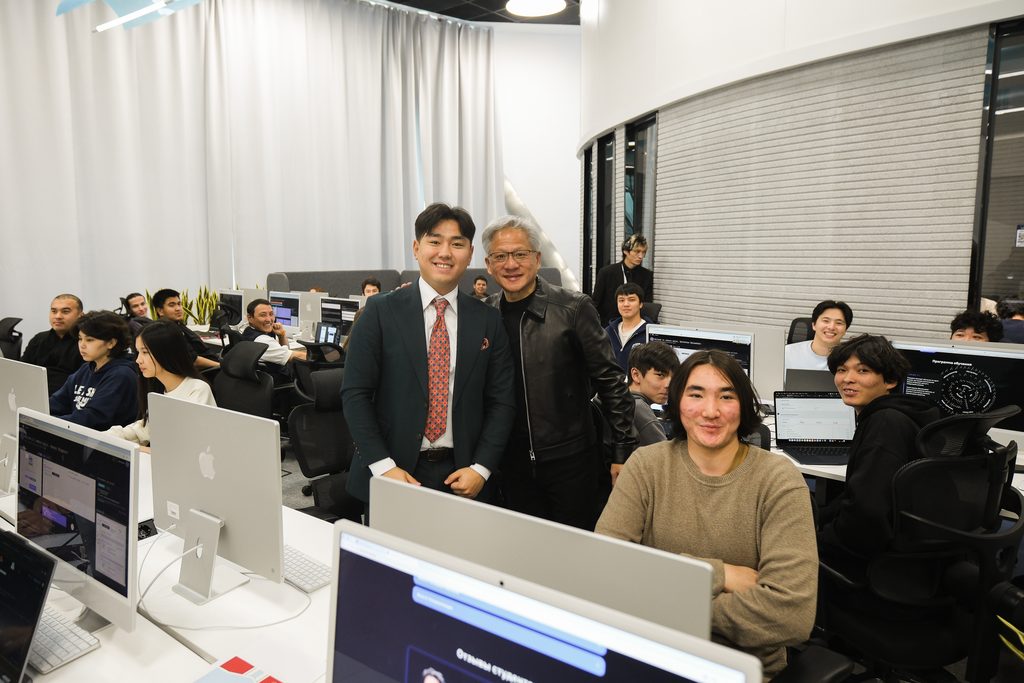
International cooperation is also extending to the institutions providing that education. According to the official announcement, representatives of 12 technical universities have participated in a pilot program run by NVIDIA’s Deep Learning Institute, or DLI. A regional DLI center at Qazaq AI Research University, known as QAIRU, is also under consideration.
Asked what he would spend the next five years learning and building if he were an 18-year-old living in Kazakhstan, Huang said he would dedicate himself to becoming exceptionally skilled at programming and using AI.
His advice went beyond writing prompts. Asked whether technical skills or social sciences were needed, he answered that both mattered. Understanding AI’s underlying principles, strengths and weaknesses, he said, was essential to making full use of its capabilities.
Creative work offers another way to connect learning with practice.
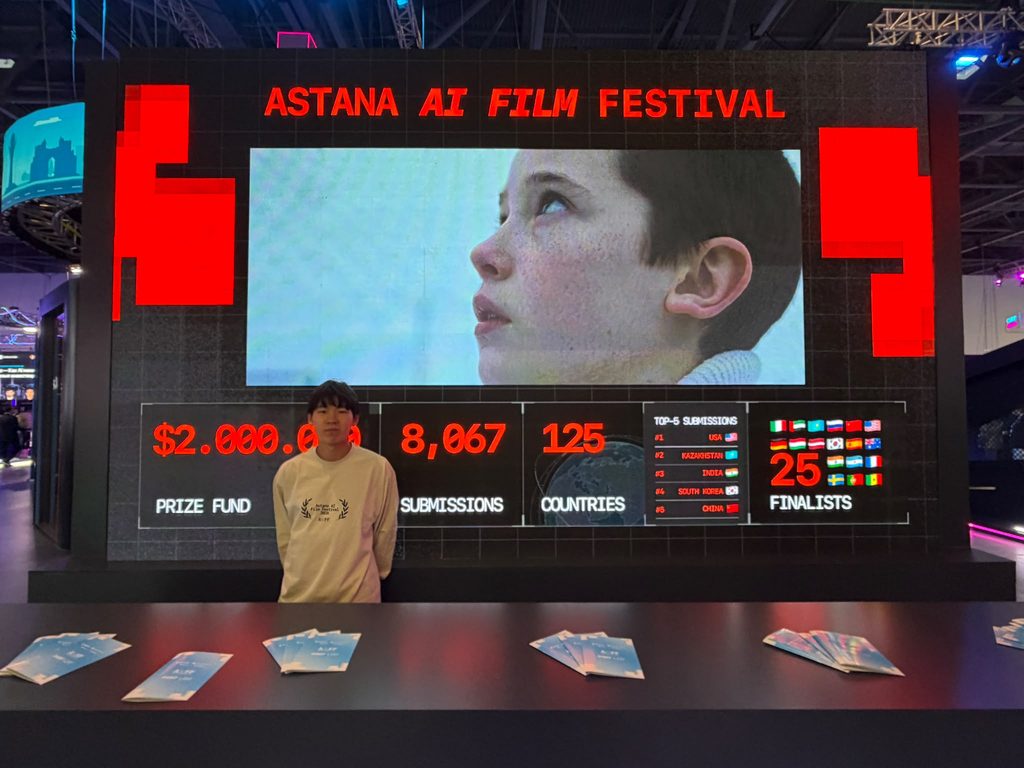
The inaugural Astana AI Film Festival, held from October 1 to 3, attracted 8,067 submissions from 125 countries, according to the organizers. The festival allocated $1 million to prizes, with another $1 million earmarked for promising AI teams and film production in Kazakhstan.
The festival and the investment in Higgsfield point to opportunities both for the people developing video generation technology and for those using it to tell stories.
Huang also stressed that bringing AI’s benefits to society required responsible development and deployment. He described the importance of limiting AI agents’ access to files and tools to what they need for their tasks, while monitoring their activity.
Kazakhstan’s undertaking seeks to connect questions that might once have belonged to separate ministries or industries: how to generate electricity, educate young people, draw on knowledge preserved in language and help companies find customers abroad.
A new economy begins to take shape when those connections become useful. A mining engineer develops a better way to interpret underground conditions. A student turns skills into a business. A filmmaker working with a modest budget reaches audiences previously beyond their means.
Related articles:
Kazakhstan Builds Pathways From AI Learning to Work and Creativity
Kazakhstan Seeks to Turn Its Eurasian Geography Into an AI Advantage
Astana and Japan Forge Future Ties Through Smart Cities, Energy Security and Nuclear Disarmament