

By Katsuhiro Asagiri
ASTANA (INPS Japan) – Kazakhstan has long drawn opportunity from its position between Europe and Asia. As wars disrupt energy supplies and trade routes, the country is seeking to turn that geography, its energy resources and its industrial experience into advantages in the age of artificial intelligence.|JAPANESE|
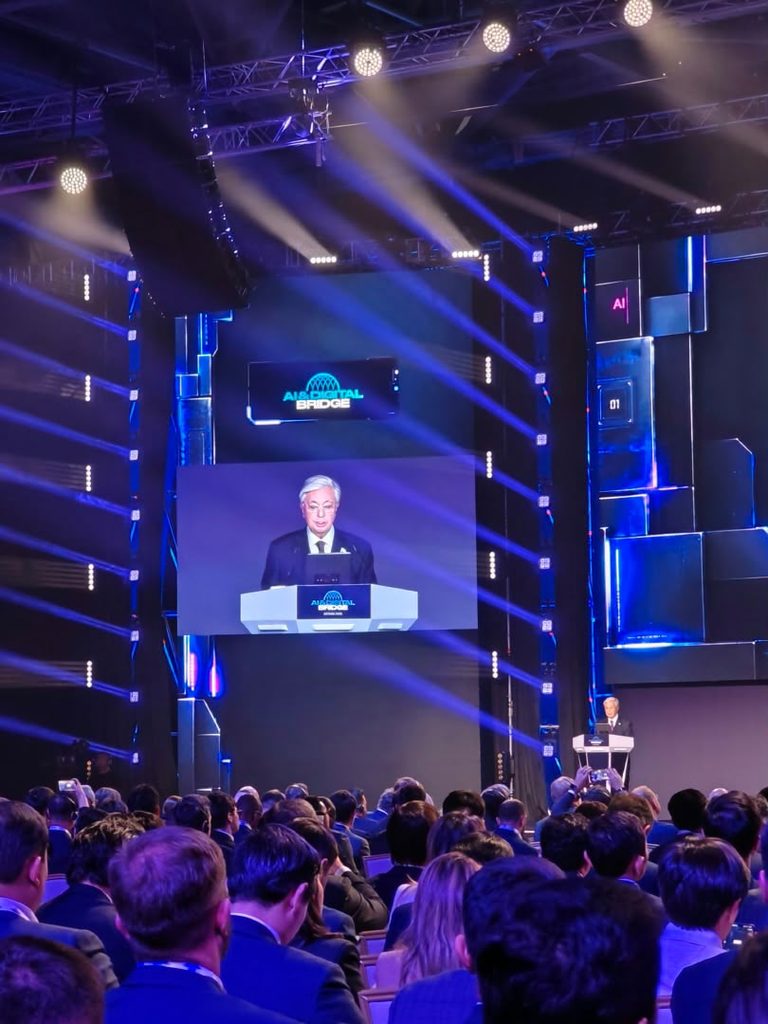
At AI & Digital Bridge 2026, which opened in Astana on October 1, President Kassym-Jomart Tokayev and international business leaders outlined a vision linking computing infrastructure, investment, connectivity and education. Briefings and conversations on the exhibition floor the following day revealed efforts to translate that vision into industrial modernization, jobs for young people and international cooperation.
Seeking to diversify beyond natural resources, Kazakhstan is embracing foreign technology while nurturing researchers and entrepreneurs at home. Its ambition is to become a place where new economic value is created.
Geopolitics gives that ambition added significance. Russia’s invasion of Ukraine heightened interest in the Middle Corridor, a network of rail and maritime routes connecting China and Central Asia with Europe through the Caspian Sea and the South Caucasus. Kazakhstan is a key junction on this route, which bypasses Russia.
Disruption to shipping through the Strait of Hormuz following U.S. and Israeli attacks on Iran this year has also underscored the importance of diversifying energy supply routes. Kazakhstan is using an export route that carries crude across the Caspian to Azerbaijan and then through the Baku–Tbilisi–Ceyhan pipeline to the Mediterranean.
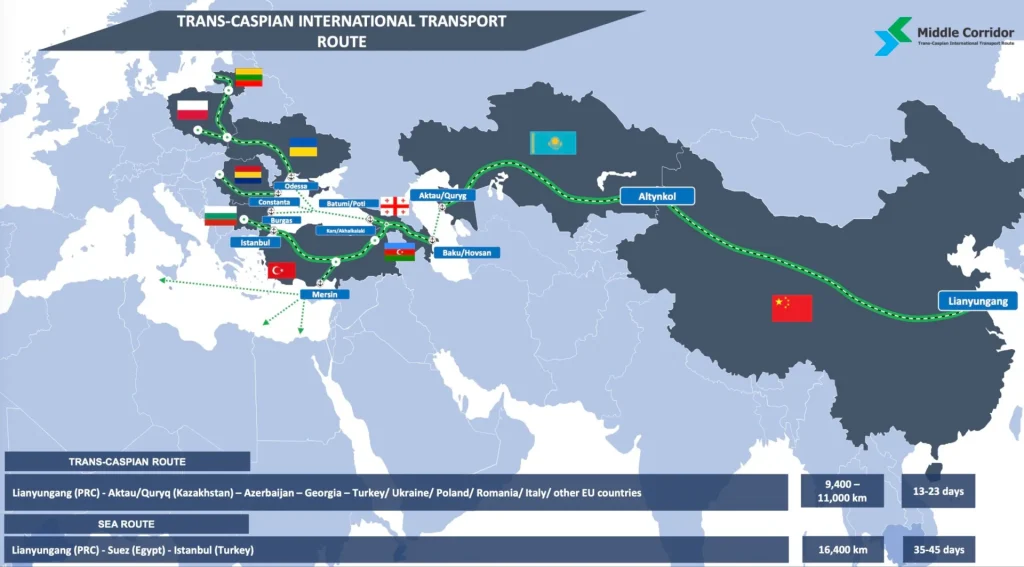
That oil route and the broader Middle Corridor are distinct, but both offer options to countries seeking more resilient supply chains. They cannot fully replace existing major routes, yet they expand Kazakhstan’s role as a hub for international connectivity.
In June, the European Union and Kazakhstan reaffirmed the strategic importance of the Trans-Caspian Transport Corridor. Japan is also supporting smoother movement along the Caspian route by providing cargo inspection equipment for customs at Aktau port.
The forum presented a vision for extending this connectivity into the digital economy: adding flows of data, computing capacity and expertise to the movement of goods and resources.
William Ford, chairman and chief executive of the U.S. investment firm General Atlantic, described AI as the next major technological wave after personal computers, the internet, mobile technology and cloud computing. He emphasized its substantial requirements for capital and energy, identifying talent and inexpensive electricity as Kazakhstan’s strengths.
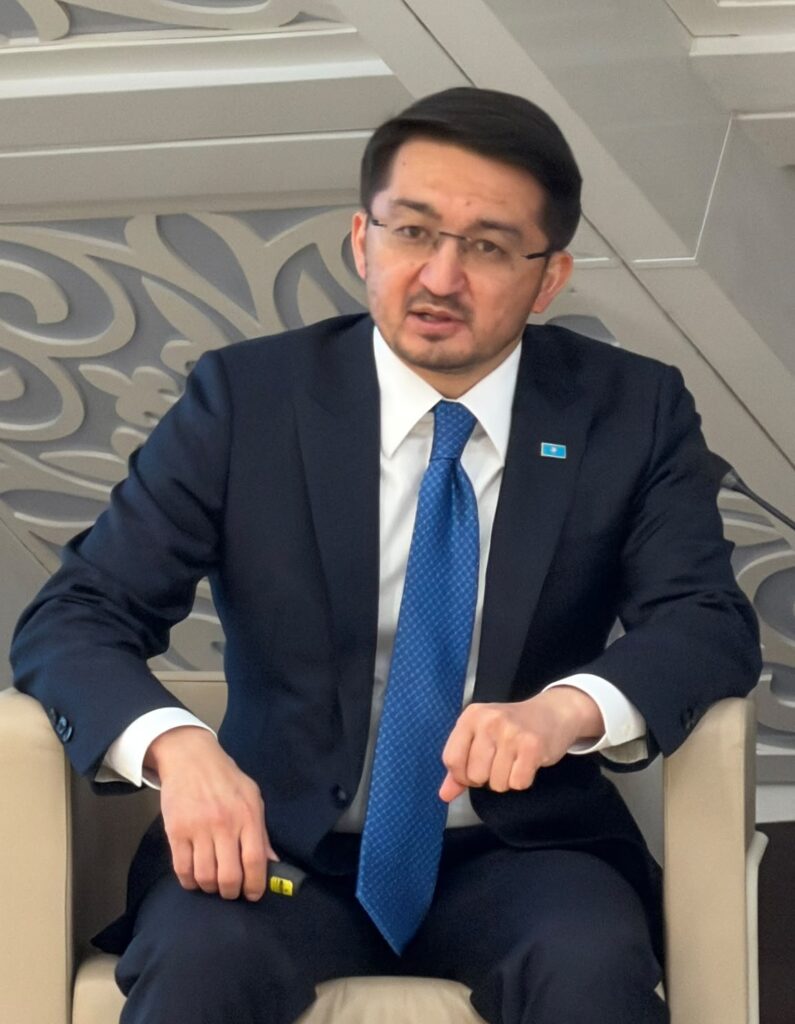
His assessment suggests a path from the country’s resource base toward new industries: use energy to attract investment in computing infrastructure, then develop research, software and services around it.
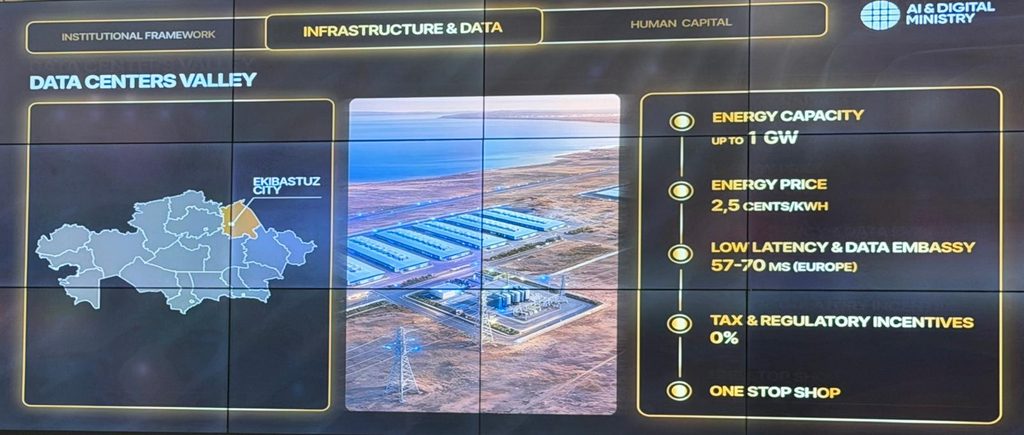
The proposed Data Center Valley in Ekibastuz embodies that vision. At an October 2 press briefing, Zhaslan Madiyev, deputy prime minister and minister of artificial intelligence and digital development, described an approach combining electricity, connectivity, investor support and regulatory arrangements.
Presentation materials advertised up to one gigawatt of power capacity and electricity at 2.5 U.S. cents per kilowatt-hour. Those figures describe the proposed scale and investment offer, rather than a fully operational facility.
Madiyev also said universities, government agencies, banks and IT companies could access existing supercomputers, connecting investment in computing infrastructure with domestic research and business development. Access arrangements, reliable power and cooling and environmental measures will be important to sustaining that infrastructure.
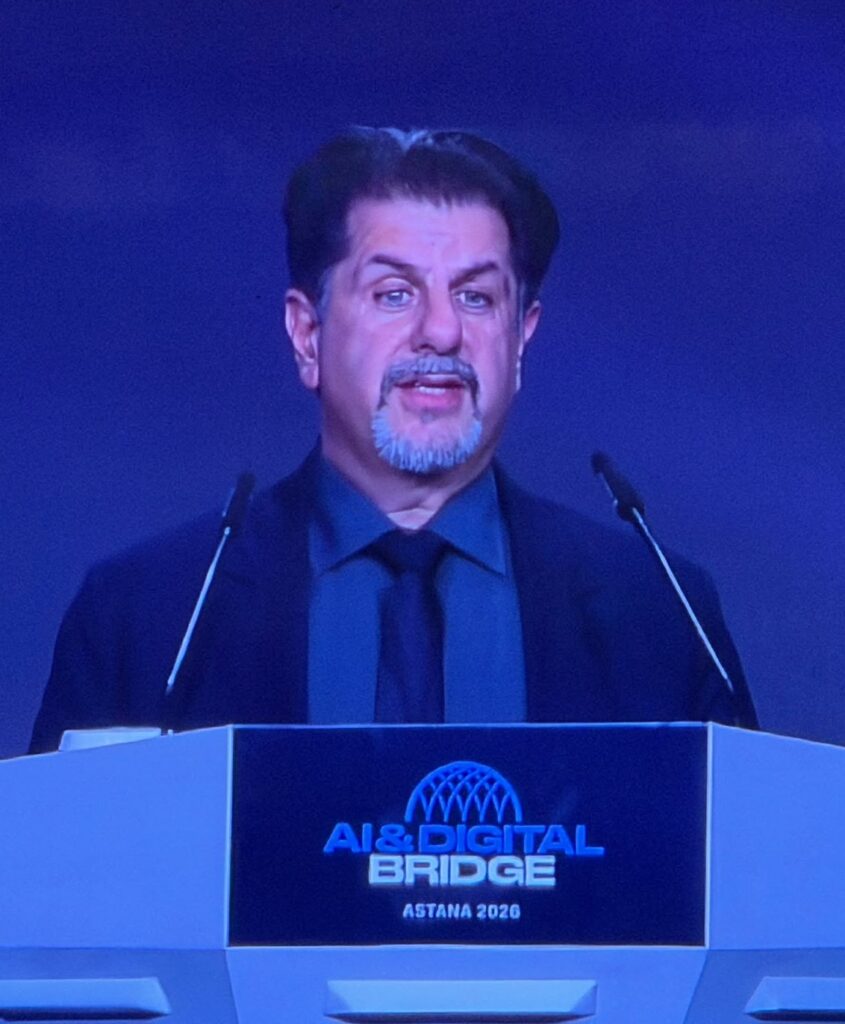
Rev Lebaredian, a vice president at NVIDIA, discussed applying AI to the physical world, including manufacturing, logistics, agriculture and energy.
Kazakhstan brings industrial experience to these applications. People working in mining, energy facilities and transport networks understand complex equipment and demanding operating conditions. Incorporating that knowledge into technology development could open opportunities for local engineers to create products suited to the industries they know.
Tokayev’s proposed AI Challenge pursues a similar goal. It would identify problems based on the economy’s actual needs, invite solutions from domestic and international teams, and deploy projects with demonstrated effectiveness in production. The initiative seeks to connect technological development with results businesses and industries need.
An October 2 panel also addressed the need to change organizations themselves. Bagdat Mussin of Kazakhtelecom argued that faster individual work with AI would not necessarily improve a company’s productivity if proposals remained trapped in lengthy approval processes. His remarks treated AI adoption as an opportunity to redesign how businesses operate.
Tokayev has placed human capital at the center of this transformation. He highlighted the recently opened Qazaq AI Research University, calling for education to be linked with research that responds to industrial needs. He also emphasized the AI+X approach, applying artificial intelligence to fields such as healthcare, energy, finance and public administration.
Equally important, he argued, are the human abilities needed to use AI well. Artificial intelligence should support learning and the acquisition of knowledge. As technology advances, critical thinking, sound judgment and a sense of responsibility become increasingly valuable.
Alem.AI, housed in the spherical former EXPO building, is designed to begin that process with accessible learning. Madiyev described a pathway from public encounters with AI through children’s education, specialist training, entrepreneurship and research to industrial applications.

According to the presentation materials, 4,500 young people have registered for the free TUMO program for ages 12 to 18. Tomorrow School offers free learning opportunities for adults aged 18 and above, using a peer learning model. Enrollment differs from completion or employment outcomes, but these programs are widening the entrance to technological education.

Network School is pursuing another connection between learning and work. A representative at its exhibition booth told INPS Japan that its recruitment process uses online and in-person examinations, interviews and trial stages to connect Kazakhstani software engineers with jobs at companies.
The representative described the initiative primarily as a community where founders and engineers live, work and interact, rather than a conventional school. It combines access to international employment opportunities with an environment for working together.
Attention is also being paid to the everyday conditions that help talent stay. The minister’s presentation identified housing, education, healthcare and safety as priorities for retention. Investments in schools, medical facilities and sports infrastructure presented by city officials that day reflected efforts to improve living conditions in a rapidly growing capital. Technology development is proceeding alongside the work of building a city where people can establish lasting lives.
Tokayev also put forward a new proposal for international cooperation.
At the third meeting of the Council for the Development of Artificial Intelligence on October 2, he suggested that the “Washington Model,” drawing on the Superintelligence Accord signed by leading U.S. technology companies, could, following expert consideration, form the basis of an international treaty under United Nations auspices.
He offered Kazakhstan as a venue for substantive international dialogue and asked council members to submit concrete proposals.
The initiative is a proposal to advance international discussion of safe and responsible AI development, rather than an agreement already concluded. Tokayev said Kazakhstan’s vision would be presented at the G20 summit in Miami in December.
At home, he advocates strict requirements where citizens’ safety, rights and vital interests are at stake, while seeking to avoid excessive regulation that could drive talent and investment abroad. The aim is a framework that supports technological development and social responsibility together.
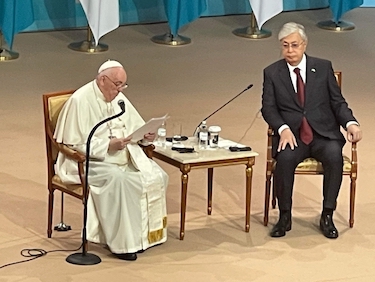
Kazakhstan’s diplomatic experience provides context for this initiative. Through its reporting on the country’s nuclear disarmament efforts and the Congress of Leaders of World and Traditional Religions,INPS Japan has followed its attempts to sustain dialogue across political and cultural differences.
The AI proposal offers a new opportunity to examine how that diplomatic practice might extend into technology cooperation. Amid intensifying competition over advanced technologies, Kazakhstan is advocating open channels for international knowledge exchange, joint research and talent development.
“Artificial intelligence must not create new dividing lines,” Tokayev said. “Technological barriers will only widen the gap between nations and slow down our progress.”
A private screening at the Astana AI Film Festival on the evening of October 1, attended by INPS Japan, offered a cultural view of the transition. Organizers said 25 finalists had been selected from 8,067 submissions from 125 countries. Winners are scheduled to be announced on October 3.
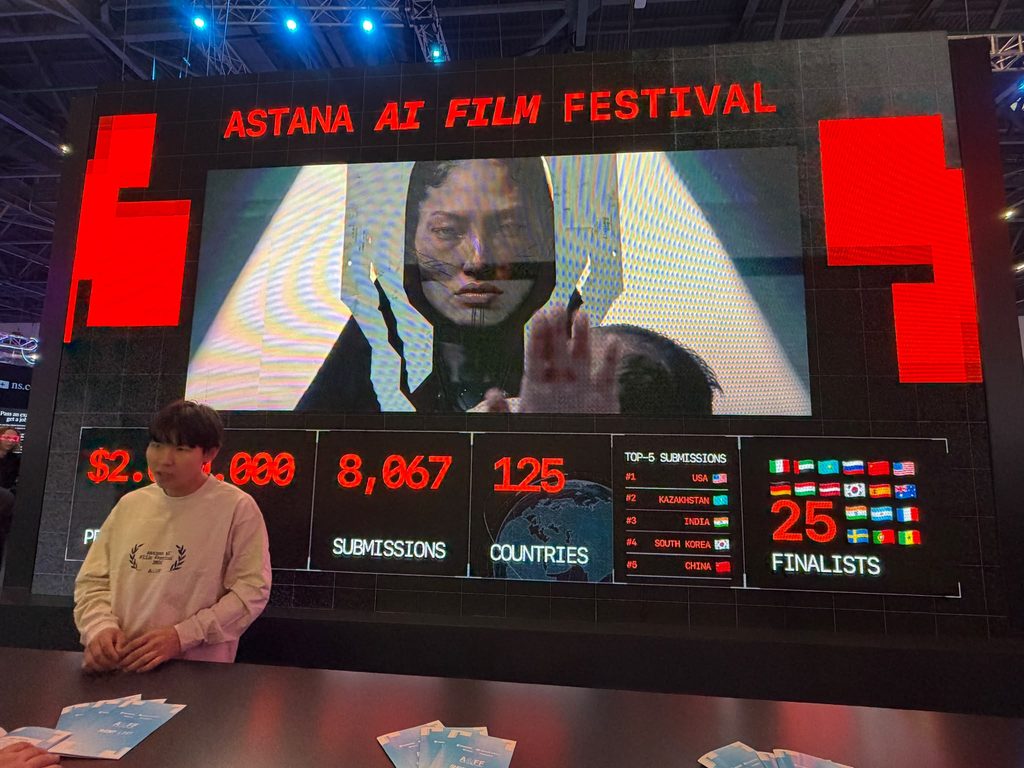
One organizer told reporters that AI had made it easier to turn ideas into films with fewer resources. That prospect — widening access to the means of creating, learning and starting businesses — runs through the forum’s broader agenda.
Tokayev’s stated ultimate objective is to translate technological progress into tangible benefits for every citizen.
The effort taking shape in Astana seeks to extend connections built on geography and resources into knowledge and creativity. Researchers using computing infrastructure, engineers solving industrial problems, young people pursuing international work and filmmakers developing new forms of expression could give Kazakhstan’s role as a bridge new meaning as their activities grow and connect at home.

This article is brought to you by INPS Japan in collaboration with Soka Gakkai International in consultative status with UN ECOSOC.

INPS Japan
Related articles:
Preparing for Economy That Doesn’t Yet Exist: Why Kazakhstan’s Experiment Is Worth Watching
Japan and Kazakhstan Draw Closer as Iran Crisis Reshapes Energy and Security Priorities
Astana and Japan Forge Future Ties Through Smart Cities, Energy Security and Nuclear Disarmament